Armenians from Turkey and around the world have descended on Akdamar (Akhtamar in Armenian) Island on Lake Van for an annual Divine Liturgy on the island’s 10th-century church, which was reopened to occasional prayer in 2010 after a hiatus of close to 100 years.
Turkish authorities restored the church between 2005 and 2007 before opening it as a museum. The Divine Liturgy was celebrated there for the first time in 95 years in 2010. This year, a baptism took place during the service in the historical church.
“During our religious service, we will pray for our country’s peace, unity and solidarity. There was no empty seats at the service four years ago, but as time passed, the number of attendees decreased. Nearly a thousand people have participated this year, unlike previous years’ thousands. For the first time in 100 years, we will have a baptism inside the church. I would like to take this occasion to thank our governor, the security forces and the mayor,” Ateşyan said.
Worshippers prayed for peace in the Middle East and in the world during the service.
Link
Monday, September 09, 2013


Tuesday, July 30, 2013
After 12 years, Turkey closes the door on American church volunteer
After 12 years serving a church in Turkey voluntarily and peacefully, Jerry Mattix suddenly is on the country's blacklist.
Officially, the government has deemed Mattix a threat to national security. Yet the police have told him he is "welcome" to apply for a visa.
Such is the perplexing state of affairs in Turkey's southeast province of Diyarbakir, where Mattix and several other once-welcome Christian foreigners have become personae non gratae.
In April and June, Turkey denied Mattix, a U.S. citizen, a religious-worker visa. When he and his family tried June 7 to re-enter the country, they were turned away.
He and his family had lived in Diyarbakir for over a decade, helping the local church. Mattix also has authored several books, in Turkish, explaining Christianity.
"What exactly they cite as my crime that is so threatening to national security I do not know," Mattix told World Watch Monitor from the United Kingdom, "but I can only guess that it has to do with the fact that I have been serving the local Turkish churches all these years."
Link
Officially, the government has deemed Mattix a threat to national security. Yet the police have told him he is "welcome" to apply for a visa.
Such is the perplexing state of affairs in Turkey's southeast province of Diyarbakir, where Mattix and several other once-welcome Christian foreigners have become personae non gratae.
In April and June, Turkey denied Mattix, a U.S. citizen, a religious-worker visa. When he and his family tried June 7 to re-enter the country, they were turned away.
He and his family had lived in Diyarbakir for over a decade, helping the local church. Mattix also has authored several books, in Turkish, explaining Christianity.
"What exactly they cite as my crime that is so threatening to national security I do not know," Mattix told World Watch Monitor from the United Kingdom, "but I can only guess that it has to do with the fact that I have been serving the local Turkish churches all these years."
Link
Thursday, June 27, 2013
Trabzonspor coach reads Bible to empathize with foreign players
Turkish football club Trabzonspor’s coach said he began reading the Bible for “a better communication” with his team’s foreigner players.

“I will find the way to reach my players’ hearts, I have been dealing with the Bible for the last six weeks. I’m spending my time on Matthew, Mark, Luke and John and trying to understand with which perspective they look at the life, what sort of faith and love they have... That’s why I believe that my connection with them will not be so hard,” Mustafa Akçay said in a press conference on June 27.
Link

“I will find the way to reach my players’ hearts, I have been dealing with the Bible for the last six weeks. I’m spending my time on Matthew, Mark, Luke and John and trying to understand with which perspective they look at the life, what sort of faith and love they have... That’s why I believe that my connection with them will not be so hard,” Mustafa Akçay said in a press conference on June 27.
Link
Sunday, June 23, 2013
Istanbul pastor shows hope to protesters
.jpg)
While protesters and police furiously clash in Istanbul, a pastor there is quietly continuing his ministry.
Nicholas* lives and works in Taksim, the epicenter of the increasingly violent encounters of recent days in Istanbul, Turkey's largest city. In the most recent clashes, tear gas invaded Nicholas' home, forcing his children to abandon their bedrooms and sleep in the living room where it was bearable.
Despite the turmoil, Nicholas said he and his family are not afraid. He is concerned about the uncertainty of the future of Turkey but believes it is a blessing to lead a church so close to the action.
"It is important that the church continue normally and demonstrate our faith," he said. "God is the ultimate authority to whom we submit."
Nicholas said he believes his nervous neighbors need to see the peace that is evident among followers of Christ. On Father's Day, Nicholas led 30 people in a subdued worship service despite the brewing threat of violence on the street.
Refusing to be distracted by the events swirling around him, Nicholas said, "Our mission is beyond this neighborhood and really beyond this world."
He said he admires the passion of the protesters who flocked to Istanbul's Gezi Park, but he sees a lack of clear purpose and goals. That is a sharp contrast to his mission of sharing the real hope that comes from having a personal relationship with God, he said.
A few days earlier, Gezi Park had been the site of tens of thousands of protesters singing, dancing and drinking in defiance of the prime minister. That party is clearly over; driven out of the park by the police, the protesters have fled and taken to the streets. In addition to being battered and shaken, they are angry and defiant, demanding a change in the country's leadership. To the protesters, Nicholas says, "Ultimately we find our confidence in God."
There is a growing fear among Christians in Turkey, but Nicholas said there is always something to fear because Christians live in a broken world.
"Every day there is something to fear -- tear gas, cancer, flu and other illness," he said.
But Christians shouldn't overcome fear, he explained, by "self-righteousness or willpower." Victory over fear, Nicholas said, only comes from God.
"If we live life in fear and depression, we've stopped living," he said.
The church will continue on as it always has, because there needs to be a place for people to hear the Gospel. "There are many more dangerous places in the world where our brothers and sisters in Christ meet faithfully," Nicholas said.
Nicholas asks for prayer for Turkey's leaders to rule with wisdom and justice. For the citizens of Turkey, he prays they would discover the true hope that can be found in God.
Link
Wednesday, June 12, 2013
Some Turkish protesters, even non-Christians, light candles to St. Anthony
Before taking part in demonstrations in Istanbul’s Taksim Square, “many young people” visit Istanbul’s largest Roman Catholic parish to light a candle to St. Anthony, according to the parish’s pastor. “They are people of all social classes and religions,” said Father Anton Bulai. “As Franciscans, in this delicate moment for the country we pray, through the intercession of St. Anthony, for the good and peace in the country.”
Link
Link
Turkey: What to Know and How to Pray
Turkey has been in the news. It's been all over the front page and protests have made international news.
After the decline and fall of the Ottoman Empire, Turkey took a road less traveled among majority Islamic nations—it leaned toward Europe rather than the Middle East.
Some are speculating it is "on the brink." Considering how the Arab Spring has played out for many Christians, such movements are of particular concern to Christians. At this point, these protests are directed at the government, which has been leading the country in a more Islamist direction, so the protests are a bit more complicated and involve several issues.

So What is Turkey?
Many people outside of the region are unfamiliar with Turkey and the Turks. If you know your Bible, you've heard of places like Ephesus, Smyrna, Laodicea. If you know church history, you've heard of places like Nicaea.
That's Turkey now.
As a matter of fact, all of the seven ecumenical councils took place in Turkey.
If there was a Bible belt over 1,500 years ago, it was in Turkey. However, that changed with the rise of Islam and its eventual conquest of the region. Then, a few centuries later, the area would be at the heart of one of the world's most powerful empires, the Islamic Ottoman Empire.
After the decline and fall of the Ottoman Empire, Turkey took a road less traveled among majority Islamic nations—it leaned toward Europe rather than the Middle East.
Turkey has more recently been seen as a moderate Muslim country, though some (including the current President) reject that terminology, and there are troubling signs for the future.
For example, Turkey was recently added to the list of countries violating religious freedom, though not without debate.
However, anyone who has been there knows that Turkey is decidedly different from the rest of the Muslim-majority world.
Turkey matters for international relations—many have looked to Turkey as a model for the future. Its politics and foreign relations are different than much of the Muslim world. For example, although relationships have been tense lately, the historic relationship of Turkey and Israel is an open secret. But, it also is one of the few places in the majority-Muslim world where Christians can and do share their faith (though not without challenge).
How Can We Pray
So, how can you pray? Well, I will share how I am praying.
I'm praying:
- That the protests geared toward the government will lead the people away from increased Islamization and to greater religious freedom.
- For the safety of "workers" serving there right now.
- For the safety of Turks and for a just end to the violence.
- That Turks in Turkey (and the 75 million Turks around the world) will turn to Christ in the midst of the tumult.
Tuesday, May 21, 2013
Who Owns Turkey’s Mosques?
Good article discussing the complex situation religious institutions face with regards to property ownership:

This discussion is proof that there is confusion in even the minds of minds about the status of mosques in Turkey. This is because the state’s control of religion in Turkey is so strict that the status of mosques may appear controversial. All imams in Turkey are civil servants, and they are appointed to these mosques by the Religious Affairs Directorate, which is operating under the authority of the prime minister's office.
The high court finally decided that mosques are places of worship, not public property. But it did not provide an answer to who are the owners of Turkey’s 80,000 mosques. These mosques are governed by civil servants appointed by the Religious Affairs Directorate, with some of the mosques belonging to foundations and associations, while others belong to the treasury.
Turkey does not recognize religious communities, neither grants legal personality to their religious institutions. In other words, mosques and churches are not recognized as such. Namely, mosques are the mosques of the Religious Affairs Directorate or they belong to an association or foundation. Mosques, churches and their congregations are not recognized as legal entities. Instead, the Religious Affairs Directorate, foundations and associations represent them legally.
There is a tremendous gap in the field of religious affairs. Turkey, to be a democratic country, must recognize religious communities and their institutions in its constitutions and laws. Then, it must pass a law concerning religious institutions that will govern the relations and needs of religious groups. This law should further regulate such matters like establishing places of worship, recruiting staff, training clerics, collecting donations, holding meetings and ceremonies, running training courses, acquiring property and building care facilities for the elderly. The criteria for recognizing places of worship should be objective, like the number of attendants; it should not be up to the state to decide whether a cemevi or Buddhist temple is a place of worship or not. Likewise, Turkey should stop meddling with the internal affairs of the patriarchates of non-Muslims, and constitutional and legal guarantees should be provided to these institutions.
In short, when it comes to freedom of religion, Turkey has a very long way to go.
Read more: http://www.al-monitor.com/pulse/originals/2013/05/turkey-mosque-ownership.html#ixzz2Tv0Agq5HSunday, May 05, 2013
Religious freedom in ‘Islamist’ Turkey
The United States Commission on International Religious Freedom (USCIRF), a body created by the American Congress, has just launched its annual report.
“For the last several years Turkey has implemented a number of reforms to begin to rectify many of the longstanding restrictions on the country’s diverse religious communities. These new policies and initiatives, which relate to returning expropriated minority properties, loosening the ban on headscarves, and issues related to textbook reforms and increased educational opportunities, among others, indicate that Turkey is moving in a positive direction with regard to religious freedom.”
It is notable that the report also contrasts this “positive direction” of Turkey with the older attitude:
“In the name of Turkish secularism, the government has long restricted religious minority communities’ ability to own, maintain, and transfer both communal and individual property, to control internal governance, and to train clergy. However, the AK [Justice and Development] Party recently has begun to reverse many of these restrictive policies, actions which the minorities generally view as positive.”
The report goes into detail and notes how the ancient regime (under Atatürk in the ‘30s, and “Atatürkist” generals in the ‘70s) had oppressed minorities:
“For many years, successive Turkish governments expropriated properties from religious minority and Muslim communities, including schools, businesses, hospitals, orphanages, and cemeteries. Most of the confiscations occurred during three distinct periods of time: first, in 1936, with the passage of the Foundations Law; second, in 1971, when the Private University Law required that all private colleges (including theological schools) be affiliated with state-run-universities; and third, in 1974, when non-Muslim communities were forbidden from owning properties other than those registered in 1936.”
“However,” the report adds, “in recent years other religious groups, including Protestants and Roman Catholics, have been permitted to register foundations.”
The report is right to note that there still are problems in Turkey, issues such as rightful demands of the Alevis, the much-delayed re-opening of the Halki Seminary of the Ecumenical Patriarchate, or societal intolerance to diversity. The struggle for freedom should go on, in other words. It just should not be misunderstood.
“For the last several years Turkey has implemented a number of reforms to begin to rectify many of the longstanding restrictions on the country’s diverse religious communities. These new policies and initiatives, which relate to returning expropriated minority properties, loosening the ban on headscarves, and issues related to textbook reforms and increased educational opportunities, among others, indicate that Turkey is moving in a positive direction with regard to religious freedom.”
It is notable that the report also contrasts this “positive direction” of Turkey with the older attitude:
“In the name of Turkish secularism, the government has long restricted religious minority communities’ ability to own, maintain, and transfer both communal and individual property, to control internal governance, and to train clergy. However, the AK [Justice and Development] Party recently has begun to reverse many of these restrictive policies, actions which the minorities generally view as positive.”
The report goes into detail and notes how the ancient regime (under Atatürk in the ‘30s, and “Atatürkist” generals in the ‘70s) had oppressed minorities:
“For many years, successive Turkish governments expropriated properties from religious minority and Muslim communities, including schools, businesses, hospitals, orphanages, and cemeteries. Most of the confiscations occurred during three distinct periods of time: first, in 1936, with the passage of the Foundations Law; second, in 1971, when the Private University Law required that all private colleges (including theological schools) be affiliated with state-run-universities; and third, in 1974, when non-Muslim communities were forbidden from owning properties other than those registered in 1936.”
“However,” the report adds, “in recent years other religious groups, including Protestants and Roman Catholics, have been permitted to register foundations.”
The report is right to note that there still are problems in Turkey, issues such as rightful demands of the Alevis, the much-delayed re-opening of the Halki Seminary of the Ecumenical Patriarchate, or societal intolerance to diversity. The struggle for freedom should go on, in other words. It just should not be misunderstood.
Monday, April 29, 2013
New Church Vandalized in Istanbul
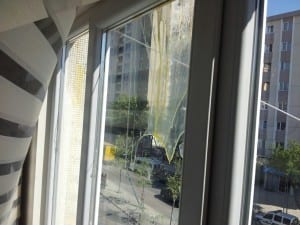
In Istanbul, in the district of Atasehir, a new Church was vandalized on Sunday. A group of around 30-40 people came to the church and threw rocks and eggs at the building, breaking several windows. Only one church member was there to see the attack, and the group's identity remains a mystery. The police arrived shortly afterwards and have launched an investigation to determine who is responsible. The group also destroyed decorations at the entrance, which had been prepared for the church's grand opening the week before. Reporters spoke with one of the Church's elders and he made the following statement, "Our Church only just opened last week and we weren't here to disturb anyone, but only to live at peace with everyone and to share God's Word with people as well as minister to the believers in the Messiah, who live in this area."

Tuesday, March 19, 2013
Minister calls on Christian and Jewish minorities to return to Turkey
Christian and Jewish minorities who have left Turkey can come back to their home country as the mistakes of the past will not be committed again, said Culture and Tourism Minister Ömer Çelik during his visit to the Russian capital, Moscow, March 16.
“If you encounter troubles anywhere in the world, know that the first place you can appeal to is the Turkish embassy. Turkey has become a democracy that protects every identity and their historical legacies,” he said, adding that minorities had faced many problems in the past. “Turkish democracy now gathers in itself every identity.”
Çelik added that the same care was shown in the restoration of mosques, churches and synagogues. He also mentioned that the Taksim Barracks, known as Topçu Kışlası, which are planned to be restored in the near future, had marks of Russian architecture. “[As the Justice and Development Party] we consider the traces left from the Russians in Anatolia as historical legacies,” he said.
Link
Bold words, but it remains to be seen what the reality will be in the future. Restoration to historical churches is taking place, but permission is not being granted for the use of these buildings, nor is permission being granted for new church buildings.
“If you encounter troubles anywhere in the world, know that the first place you can appeal to is the Turkish embassy. Turkey has become a democracy that protects every identity and their historical legacies,” he said, adding that minorities had faced many problems in the past. “Turkish democracy now gathers in itself every identity.”
Çelik added that the same care was shown in the restoration of mosques, churches and synagogues. He also mentioned that the Taksim Barracks, known as Topçu Kışlası, which are planned to be restored in the near future, had marks of Russian architecture. “[As the Justice and Development Party] we consider the traces left from the Russians in Anatolia as historical legacies,” he said.
Link
Bold words, but it remains to be seen what the reality will be in the future. Restoration to historical churches is taking place, but permission is not being granted for the use of these buildings, nor is permission being granted for new church buildings.
Wednesday, March 13, 2013
Turkey to permit religious headscarves
Turkey's labor minister said he will work to remove a ban on women's religious headscarves in government buildings.
Faruk Celik said he received a petition with 12.3 million signatures demanding the headscarf ban be lifted and calling for Muslim women -- many of whom believe the scarves to be a religious commandment -- to be free to dress as they please, Hurriyet Daily News said Saturday. "I am convinced that this process will lead to enhanced social peace and harmony -- and will be a key ingredient for the normalization process," Celik said.
Prime Minister Recep Tayyip Erdogan has agreed, noting no such ban on headscarves exists in the nation's constitution.Read more:
Wednesday, February 27, 2013
Protestants and Mor Gabriel on agenda at Merkel’s visit
Mor Gabriel Monastery and the Malatya Zirve Publishing House Massacre were among the main agenda topics during talks in Ankara on Feb. 25, in which German Chancellor Angela Merkel and Turkish Prime Minister Recep Tayyip Erdoğan met with various spiritual leaders.
Fener Greek Patriarch Bartholomew, Acting Patriarch Archbishop Aram Ateşyan, Chief Rabbi Ishak Haleva, Syriac Mor Gabriel Monastery’s Metropolitan Archbishop Samuel Aktaş, the Turkish Syriac Catholic Deputy Patriarch Chorepiscopus Yusuf Sağ, and Ümit Şahin, Protestant Churches Association General Secretary and Coordinator of the Association’s Committee on Religious Freedom, were present in the meeting, which was held in the Official Residence of the Prime Ministry.
 “We at least saw that the state values and accepts us on legitimate grounds. We hope to be a part of the dialogue process from now on,” Ümit Şahin said.
Şahin also said they mostly focused on the Zirve massacre case and the problems Suzanna Geske – the wife of massacre victim Tillman Geske – faced regarding her Turkish citizenship, excluding religion boxes on ID cards, and various issues concerning the church building. “Geske’s application for Turkish citizenship was rejected, and she appealed it for the second time. The Prime Minister told his advisors to deal with the matter,” Şahin said. Three missionaries – German citizen Tillman Geske and two Turks, Necati Aydın and Uğur Yüksel – were tied up and tortured before their throats were slit at the Zirve Publishing House, a Christian publisher in the eastern province of Malatya, on April 18, 2007.
Link
“We at least saw that the state values and accepts us on legitimate grounds. We hope to be a part of the dialogue process from now on,” Ümit Şahin said.
Şahin also said they mostly focused on the Zirve massacre case and the problems Suzanna Geske – the wife of massacre victim Tillman Geske – faced regarding her Turkish citizenship, excluding religion boxes on ID cards, and various issues concerning the church building. “Geske’s application for Turkish citizenship was rejected, and she appealed it for the second time. The Prime Minister told his advisors to deal with the matter,” Şahin said. Three missionaries – German citizen Tillman Geske and two Turks, Necati Aydın and Uğur Yüksel – were tied up and tortured before their throats were slit at the Zirve Publishing House, a Christian publisher in the eastern province of Malatya, on April 18, 2007.
Link
 “We at least saw that the state values and accepts us on legitimate grounds. We hope to be a part of the dialogue process from now on,” Ümit Şahin said.
Şahin also said they mostly focused on the Zirve massacre case and the problems Suzanna Geske – the wife of massacre victim Tillman Geske – faced regarding her Turkish citizenship, excluding religion boxes on ID cards, and various issues concerning the church building. “Geske’s application for Turkish citizenship was rejected, and she appealed it for the second time. The Prime Minister told his advisors to deal with the matter,” Şahin said. Three missionaries – German citizen Tillman Geske and two Turks, Necati Aydın and Uğur Yüksel – were tied up and tortured before their throats were slit at the Zirve Publishing House, a Christian publisher in the eastern province of Malatya, on April 18, 2007.
Link
“We at least saw that the state values and accepts us on legitimate grounds. We hope to be a part of the dialogue process from now on,” Ümit Şahin said.
Şahin also said they mostly focused on the Zirve massacre case and the problems Suzanna Geske – the wife of massacre victim Tillman Geske – faced regarding her Turkish citizenship, excluding religion boxes on ID cards, and various issues concerning the church building. “Geske’s application for Turkish citizenship was rejected, and she appealed it for the second time. The Prime Minister told his advisors to deal with the matter,” Şahin said. Three missionaries – German citizen Tillman Geske and two Turks, Necati Aydın and Uğur Yüksel – were tied up and tortured before their throats were slit at the Zirve Publishing House, a Christian publisher in the eastern province of Malatya, on April 18, 2007.
Link
Sunday, February 17, 2013
American priest applying for indefinite visa fined for working illegally

Jeremiah Ian Mattix has been living in Turkey with a tourist visa since 2003 and requested an indefinite visa because he is a religious functionary, according to the report.
Following his application, police officers determined that he was presiding over services, as well as teaching for the church. Based on police officers’ complaints, inspectors from the Turkish Labor Institution (İŞKUR) came to Diyarbakır to assess Mattix’s case.
The church was ultimately fined 6,795 Turkish Liras ($3,850) while Mattix was fined 670 liras ($380) for working illegally.
Ahmet Güvener, president of the association of Diyarbakır’s Protestant Church, objected to the decision, saying the church was in a difficult economic situation.
“As there isn’t a priest to educate our community in the Christian faith, the Protestant Church in the United States has voluntarily appointed Mattix. We don’t pay any salary to Mattix who is one of the executives of our association,” Güvener told Habertürk, adding that Mattix should be designated a religious functionary, just as imams working inEurope are.
Link
Friday, February 15, 2013
Progress and setbacks for Protestants in Turkey
Turkey's Protestant Christian population has registered important advances in recent years even as they continue to grapple with negative stereotypes and perceived restrictions on their freedom of worship, religious leaders told SES Türkiye.
Behnan Konutgan, pastor of Eminonu Immanuel Protestant Church in Istanbul, said church authorities constructively worked with the government on several issues in 2012.
"Upon the invitation of Turkish education authorities, we launched in 2012 a comprehensive project on the possibility of Christian students being given lessons on Christianity," he told SES Türkiye.
A committee representing Protestant churches in Turkey is preparing textbooks and curricula to support this effort. The work is expected to be finalised this year.
Authorities also allowed religious celebrations in public areas.
"Last Christmas, we submitted a request to the governorate to celebrate the holiday in the streets of Istanbul's Kadikoy district, which was quickly approved. We're pleased that there was no single attempt to attack or disturb us," Konutgan said. "We distributed flowers to the people we saw in the neighbourhood and walked around singing carols."
Protestants were also invited to parliament's constitutional committee last year to express their opinions on the draft under preparation.
But amid signs of progress, a new report by the Association of Protestant Churches in Turkey said violent attacks on their members and places of worship continue, listing 10 hate crime incidents in 2012.
Hate crimes became a national focus following a series of deadly attacks on Christians in 2007. The interior ministry subsequently issued a decree calling on local authorities to increase measures to protect non-Muslim populations from violence and promote social tolerance.
Umut Sahin, general secretary of Association of Protestant Churches, told SES Türkiye that conditions improved after 2007, only to turn for the worst in later years.
"Between the period 2008-2010, there was a relative decline in hate crimes towards our community, as a result of the democratisation wave especially," he said.
"However, starting from 2010, the increase of terrorist attacks in the southeast pushed the Turkish state and society into anxiety, leading to an increase in intolerance against the Protestant community."
Sahin added that an inability to identify individuals responsible for attacks in 2012 led to an "uncontrolled and unchecked spread of hate crimes."
Mine Yildirim, doctoral candidate at the Finland-based AAbo Akademi Institute for Human Rights, who helped prepare the new report, said many hate crime cases end without thorough investigation.
"In many instances, people who have been attacked forgive the guilty person or withdraw their complaint. And police forces tend to consider these cases as individual ones, underestimating the need for a comprehensive look at what's behind them," she told SES Türkiye.
Link
Behnan Konutgan, pastor of Eminonu Immanuel Protestant Church in Istanbul, said church authorities constructively worked with the government on several issues in 2012.
"Upon the invitation of Turkish education authorities, we launched in 2012 a comprehensive project on the possibility of Christian students being given lessons on Christianity," he told SES Türkiye.
A committee representing Protestant churches in Turkey is preparing textbooks and curricula to support this effort. The work is expected to be finalised this year.
Authorities also allowed religious celebrations in public areas.
"Last Christmas, we submitted a request to the governorate to celebrate the holiday in the streets of Istanbul's Kadikoy district, which was quickly approved. We're pleased that there was no single attempt to attack or disturb us," Konutgan said. "We distributed flowers to the people we saw in the neighbourhood and walked around singing carols."
Protestants were also invited to parliament's constitutional committee last year to express their opinions on the draft under preparation.
But amid signs of progress, a new report by the Association of Protestant Churches in Turkey said violent attacks on their members and places of worship continue, listing 10 hate crime incidents in 2012.
Hate crimes became a national focus following a series of deadly attacks on Christians in 2007. The interior ministry subsequently issued a decree calling on local authorities to increase measures to protect non-Muslim populations from violence and promote social tolerance.
Umut Sahin, general secretary of Association of Protestant Churches, told SES Türkiye that conditions improved after 2007, only to turn for the worst in later years.
"Between the period 2008-2010, there was a relative decline in hate crimes towards our community, as a result of the democratisation wave especially," he said.
"However, starting from 2010, the increase of terrorist attacks in the southeast pushed the Turkish state and society into anxiety, leading to an increase in intolerance against the Protestant community."
Sahin added that an inability to identify individuals responsible for attacks in 2012 led to an "uncontrolled and unchecked spread of hate crimes."
Mine Yildirim, doctoral candidate at the Finland-based AAbo Akademi Institute for Human Rights, who helped prepare the new report, said many hate crime cases end without thorough investigation.
"In many instances, people who have been attacked forgive the guilty person or withdraw their complaint. And police forces tend to consider these cases as individual ones, underestimating the need for a comprehensive look at what's behind them," she told SES Türkiye.
Link
Saturday, February 09, 2013
Turkey's Christians Could Face Nationalist Backlash
Religion was kept out of the public square for centuries in Turkey, but the country has become more Islamic with the "Islamic-oriented" AKP government in power for a decade. Turkish nationalists, who believe in secularism—and are the main persecutors of Christians—have become more active out of their disappointment, and could turn their anger toward religious minorities.
Historically, Turkey has welcomed Westernization, imbibed a secular mindset, seen itself as more European than Middle-Eastern, and completely banned religion from the public square, keeping it firmly under state control.
However, thanks to the government of the Justice and Development Party, locally known as the AKP, which came to power in 2002, the nation now sees itself as more Middle-Eastern than European, and considers other Muslim countries as brother nations. The AKP, presently in its third consecutive term, has been gradually contributing to Turkey's new Islamic political ethos.
As a result, Turkey now embodies a unique blend of Western ways and Islamist politics not seen anywhere else in the world.
The influence of Islam in the political sphere has not been welcomed by Turkish nationalists who, though they think only Muslims can be Turks, believe in secularism. For them, being Muslim is about identity and not faith. The nationalists have, therefore, become more active, which jeopardizes the security of Christians, mainly the Protestants.
Turkish nationalists see non-Muslim minorities as a threat to national security. So much so, that a Turkish atheist is less of a problem than a Turkish Christian, which they consider to be an oxymoron.
A report titled "Human Rights Violations Report 2012" by the Association of Protestant Churches in Turkey, records at least 10 major attacks on Protestant Christians and churches in the year.
In April 2012, four young men threatened a church leader with statements like, "This is a Muslim neighborhood, what business does a church have here? Unless you recite the Muslim creed we will kill you." They hit him and then fled the area.
Throughout the year, a church official in the city of Izmir faced verbal threats and egg attacks from youths in his neighborhood. Finally, after he was threatened with a gun, the church threatened to take legal action. Under pressure from neighborhood leaders and family members, the young men apologized and the church withdrew its threat of complaint.
Last February, a church building in the city of Samsun was vandalized. The man was quickly identified and apprehended. When he confessed, the church retracted its complaint and he was released. It should be noted that this kind of discrimination is commonplace in the region.
The 2012 report was, however, soft on the AKP government and noted some improvements on the side of the authorities.
After years of persecution, the AKP government holds more promise for religious freedom than its secular and more nationalist, predecessors, the report indicated. Although bureaucratic hurdles still remain, it is now easy to open houses of worship. The state has even offered either compensation for, or the return of property that had earlier been confiscated from non-Muslim community foundations.
In 2012, work began on the possibility of Christian students being given lessons on Christianity. The textbooks and curriculum are being prepared with the help of local congregations. The Protestant community was invited to the Constitution Reconciliation Committee, and was granted the opportunity to give their opinions about the new constitution being written. There were no places of worship closed in 2012, even though one facility used for worship received a closure notice.
However, responses of the international community to the AKP government's moves need to be cautious, given that increased Islamization can eventually threaten the well-being of the religious minorities.
Besides, the AKP's new reforms, while some of them were positive, are not enough to guarantee protection for religious minorities from hyper-nationalists who continue to see Christians as a threat to Turkish identity and security. Their discontentment is rising with the new direction that the nation is taking under the AKP leadership. As they become more insecure about the future, Christians in Turkey might also become more vulnerable to anti-religious reactions.
As Turkey tries to find its voice as a secular nation ruled by religious Muslims, it will need to amend its understanding of secularism to be more inclusive and less nationalistic. It will need to protect the religious freedom of all faith communities from the backlash of secular nationalists by granting them legal rights, status and protection. The future of Turkey looks to be unlike anything in its history, but today it needs to give its people the freedom to choose their religion without being seen as a threat to the Turkish identity.
Historically, Turkey has welcomed Westernization, imbibed a secular mindset, seen itself as more European than Middle-Eastern, and completely banned religion from the public square, keeping it firmly under state control.
However, thanks to the government of the Justice and Development Party, locally known as the AKP, which came to power in 2002, the nation now sees itself as more Middle-Eastern than European, and considers other Muslim countries as brother nations. The AKP, presently in its third consecutive term, has been gradually contributing to Turkey's new Islamic political ethos.
As a result, Turkey now embodies a unique blend of Western ways and Islamist politics not seen anywhere else in the world.
The influence of Islam in the political sphere has not been welcomed by Turkish nationalists who, though they think only Muslims can be Turks, believe in secularism. For them, being Muslim is about identity and not faith. The nationalists have, therefore, become more active, which jeopardizes the security of Christians, mainly the Protestants.
Turkish nationalists see non-Muslim minorities as a threat to national security. So much so, that a Turkish atheist is less of a problem than a Turkish Christian, which they consider to be an oxymoron.
A report titled "Human Rights Violations Report 2012" by the Association of Protestant Churches in Turkey, records at least 10 major attacks on Protestant Christians and churches in the year.
In April 2012, four young men threatened a church leader with statements like, "This is a Muslim neighborhood, what business does a church have here? Unless you recite the Muslim creed we will kill you." They hit him and then fled the area.
Throughout the year, a church official in the city of Izmir faced verbal threats and egg attacks from youths in his neighborhood. Finally, after he was threatened with a gun, the church threatened to take legal action. Under pressure from neighborhood leaders and family members, the young men apologized and the church withdrew its threat of complaint.
Last February, a church building in the city of Samsun was vandalized. The man was quickly identified and apprehended. When he confessed, the church retracted its complaint and he was released. It should be noted that this kind of discrimination is commonplace in the region.
The 2012 report was, however, soft on the AKP government and noted some improvements on the side of the authorities.
After years of persecution, the AKP government holds more promise for religious freedom than its secular and more nationalist, predecessors, the report indicated. Although bureaucratic hurdles still remain, it is now easy to open houses of worship. The state has even offered either compensation for, or the return of property that had earlier been confiscated from non-Muslim community foundations.
In 2012, work began on the possibility of Christian students being given lessons on Christianity. The textbooks and curriculum are being prepared with the help of local congregations. The Protestant community was invited to the Constitution Reconciliation Committee, and was granted the opportunity to give their opinions about the new constitution being written. There were no places of worship closed in 2012, even though one facility used for worship received a closure notice.
However, responses of the international community to the AKP government's moves need to be cautious, given that increased Islamization can eventually threaten the well-being of the religious minorities.
Besides, the AKP's new reforms, while some of them were positive, are not enough to guarantee protection for religious minorities from hyper-nationalists who continue to see Christians as a threat to Turkish identity and security. Their discontentment is rising with the new direction that the nation is taking under the AKP leadership. As they become more insecure about the future, Christians in Turkey might also become more vulnerable to anti-religious reactions.
As Turkey tries to find its voice as a secular nation ruled by religious Muslims, it will need to amend its understanding of secularism to be more inclusive and less nationalistic. It will need to protect the religious freedom of all faith communities from the backlash of secular nationalists by granting them legal rights, status and protection. The future of Turkey looks to be unlike anything in its history, but today it needs to give its people the freedom to choose their religion without being seen as a threat to the Turkish identity.
Subscribe to:
Posts (Atom)